





Marathon Fuel Guide: How to Carb Load and Fuel Race Day
42.2km is a different animal to a half marathon, and your fuelling needs to reflect that. Whether race day is months away or next week, here's exactly what to do to get it right.
Practice fuelling how you plan to race
Even easy-to-digest carbohydrate takes practice — your metabolic system needs reps working alongside your endurance system, same as your legs do. Build the habit of fuelling every long training run, and plan at least 3–4 full race-day rehearsals in the lead-up. Over marathon distance there's more that can go wrong on the day, so more rehearsal isn't optional — it's what removes the guesswork when it matters.
Do I need to carb load for a marathon?
Yes — and more aggressively than you would for a half marathon.
A carb load is a short window, typically 3–4 days out from race day, where you increase carbohydrate intake to fully top up glycogen stores. Glycogen is your body's preferred fuel for endurance efforts. Once it runs low, your body starts leaning on backup systems — breaking down muscle, destabilising blood sugar and hormones. Runners know this as "the wall," and over marathon distance it's far more than a theoretical risk.
Glycogen and fat burn like kindling and a log. Glycogen catches fast and burns hot but doesn't last; fat takes longer to get going but keeps the fire alive for hours. A half marathon, most runners can run almost entirely on kindling. A full marathon asks the log to catch too — so you want a full stack of kindling laid down before the gun goes.
How much glycogen do you need?
Your body can store roughly 480–600g of carbohydrate across liver and muscle — around 2,000–2,400 calories. That sounds like a lot, but a marathon effort for most runners burns through 2,600–3,000+ calories. Unlike a half marathon, where full stores usually cover the distance with room to spare, a marathon can realistically draw glycogen down close to empty. That's exactly why the carb load and in-race fuelling both matter here in a way they don't quite as urgently over 21.1km.
How to carb load for a marathon — simplified
Avoid heavy, greasy, or unfamiliar foods in the days before the race. The classic mistake is loading up on pizza or pastry — high in fat, which slows digestion and can leave you heavy-legged or searching for a bathroom on race morning.
3–4 days out: steadily lift carbohydrate intake, favouring familiar, easily digested sources — rice, potatoes, oats, bread, fruit. This is a bigger and longer lift than a half marathon carb load, so give it the full runway rather than cramming it into the day before.
Day before the race: don't overhaul everything — dial in what you've already been practising. Common mistake: a huge pre-race dinner that leaves you stuffed and disrupts sleep. Opt for a bigger lunch and a lighter dinner instead.
Race morning fuelling
Your final top-up. Aim for 1–2g of carbohydrate per kg of bodyweight, 2–3 hours before the start. Keep fat, fibre, and protein low so digestion isn't competing with nerves. White bread or a bagel with honey, or oats with banana, both work well.
How to fuel marathon race day
You've carb loaded and your stores are full — so why fuel during the race at all? Over a half marathon, it's mostly to protect blood glucose and the nervous system. Over a full marathon, it's that plus something more direct: delaying the point where glycogen actually runs out.
Blood sugar dips well before glycogen actually runs out — pace, focus, and mood all start to slip long before the stores are empty. In-race fuelling smooths that curve out, and over 42.2km that's the difference between a strong back-half and a walk to the finish.
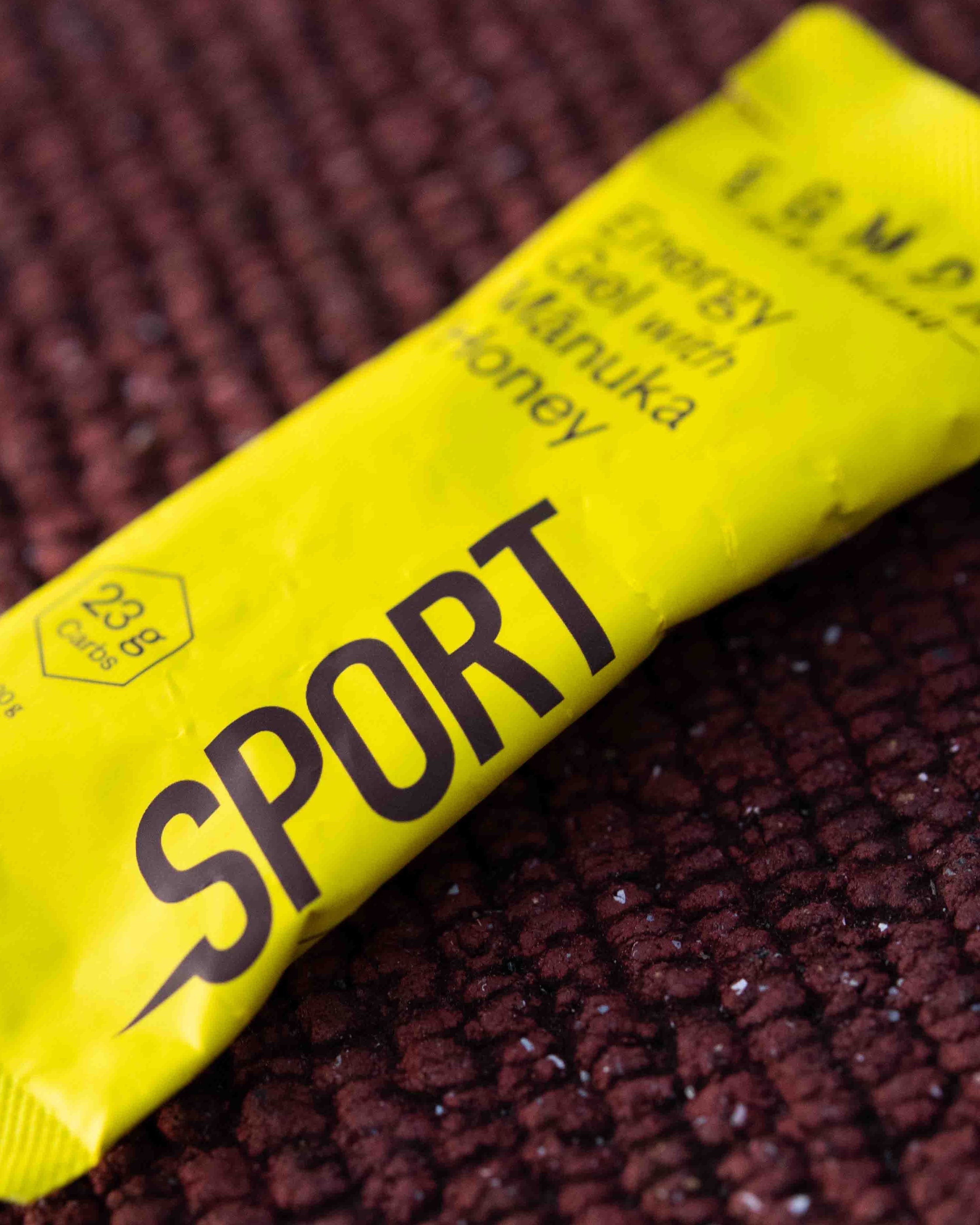
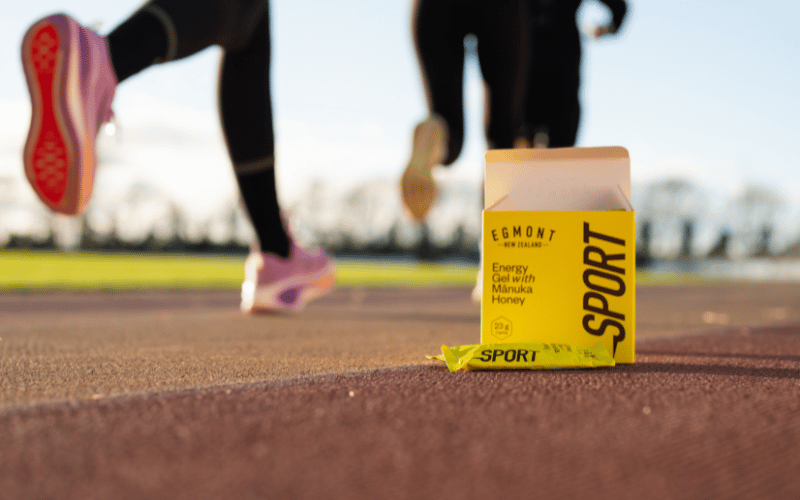
Stick to what you rehearsed in training. Aim for 50–90g of carbohydrate an hour, depending on pace and gut tolerance. Each Energy Gel with Manuka Honey carries 23g of carbohydrate, so in practical terms:
1 gel every 15 minutes ≈ 90g/hour — top end, hardest efforts
1 gel every 20 minutes ≈ 70g/hour — most marathoners' sweet spot
1 gel every 28 minutes ≈ 50g/hour — lower end, easier pacing or lower tolerance
Over a full marathon, small pacing errors in fuelling compound — a gel missed at hour one is a much bigger miss by hour three. Set a watch alert and stick to the interval you've rehearsed, especially through the second half.
Marathon Fuel Guide: The Wrap-up
Fuelling in training = your race-day rehearsal, non-negotiable over this distance
Pre-race carb load = your biggest performance lever, bigger than for a half marathon
In-race carbs (50–90g/hr) = not just pace insurance — genuine glycogen protection across 42.2km



Leave a comment
This site is protected by hCaptcha and the hCaptcha Privacy Policy and Terms of Service apply.