



How to use Sports Gels: A Runner's Weekly Fuelling Guide
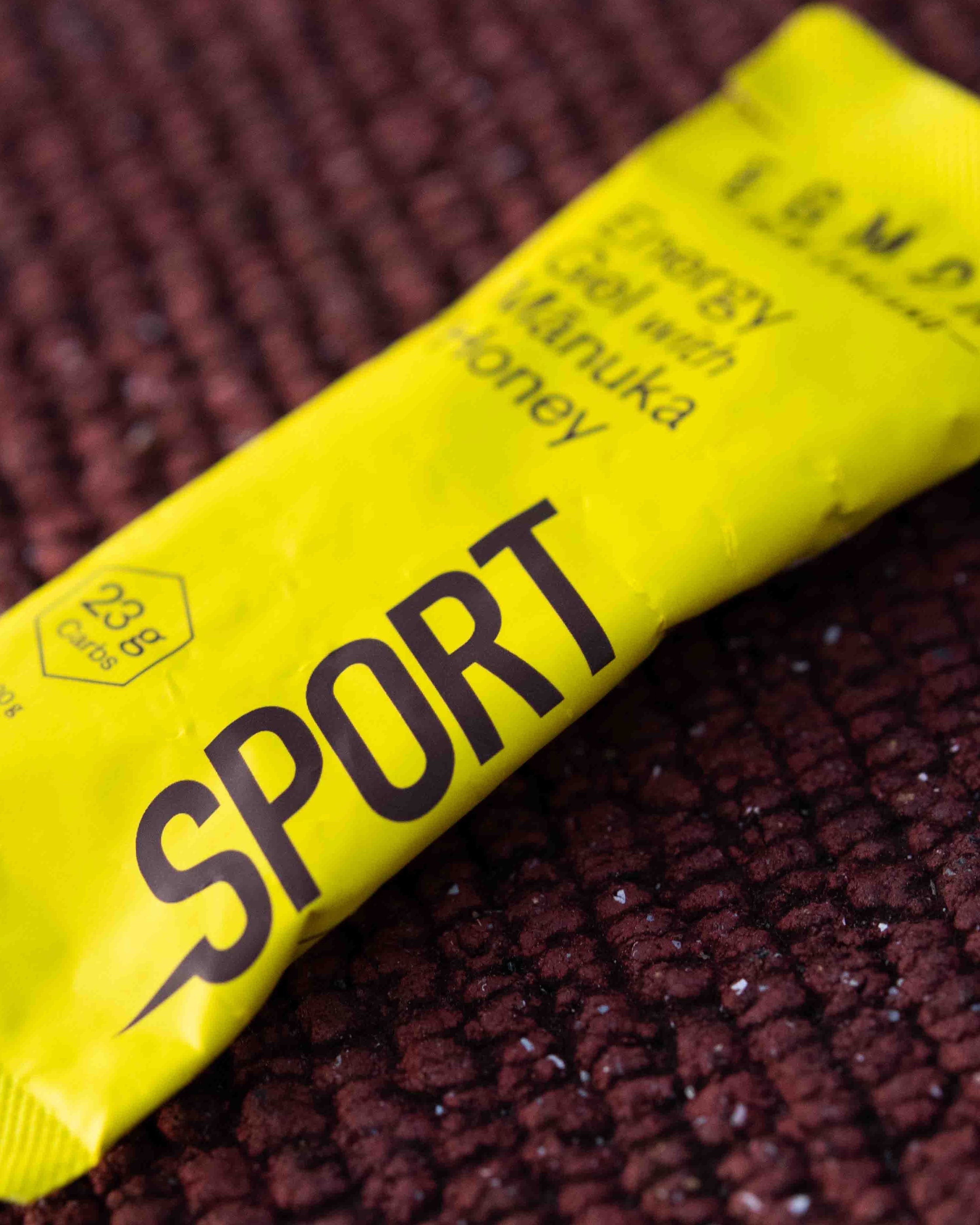
You've signed up for the race. The training's ticking along. Now comes the part most runners skip until it bites them — learning how to use sports gels properly, so you keep progressing instead of breaking down. This guide walks through exactly how to incorporate an energy gel into every type of run in your week, using our Energy Gel with Mānuka Honey as the example.
Getting started with Sports Gels
Don't run fasted, especially in the morning. A few carbs beforehand steadies your blood sugar and switches your body into work mode. Any session 45 minutes or longer needs fuel mid-run, not just before or after. And treat every training fuel stop as a rehearsal — race day is not the place to try a gel for the first time.
How many Sports Gels do you need per hour?
This is the question most runners are actually asking when they search "how to use sports gels" — and it comes down to carbs per hour.
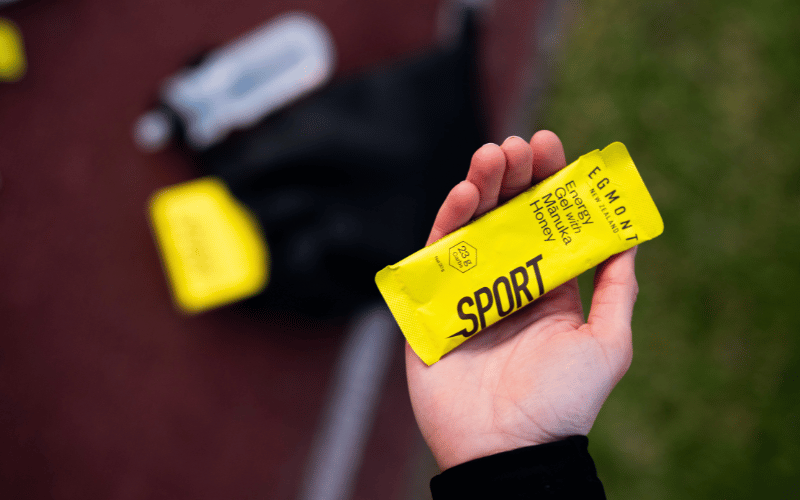
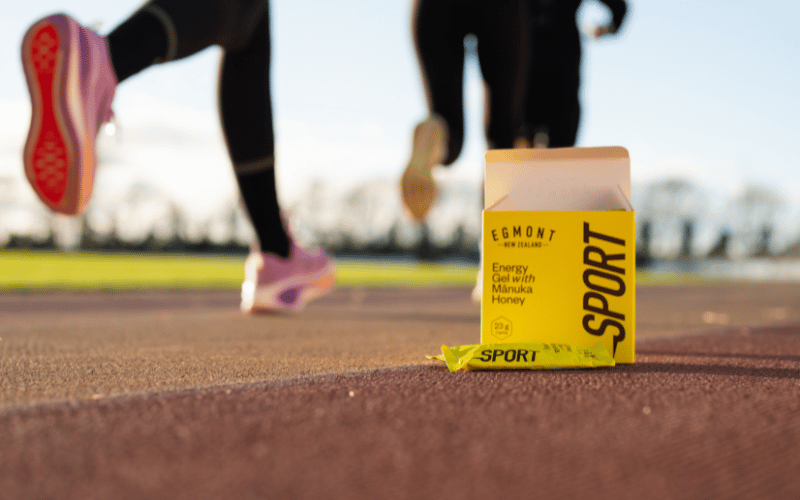
Current guidance suggests up to 90g of carbohydrate an hour for races and your hardest sessions. Each Energy Gel with Mānuka Honey carries 23g of carbohydrate, so that's roughly one gel every 15 minutes at the top end. Most runners, most of the time, don't need quite that much — 50–75g an hour (two to three gels, spaced every 20–28 minutes) covers the bulk of training. Here's how that breaks down by session.
Fuelling your long run
The cornerstone of your week and your best chance to practise fuelling for real.
Easy long runs: one gel every 30–40 minutes
Harder long runs (progressive or race pace): one gel every 20–25 minutes
Whatever you take on long run day is what you take on race day — so get it dialled in now, not in the final taper week.
Fuelling intervals
Short, sharp, 45–60 minutes of real effort. One gel at the halfway mark is enough to hold your form through the back half of the set. It's a small thing that makes a bigger difference than it looks like it should.
Fuelling threshold sessions
Controlled, hard, and only as good as your fuelling allows. One gel every 15–20 minutes keeps the quality in the work and takes the edge off recovery the next day.
Fuelling easy runs
The reward after a hard week — but still not a free pass.
- Under 45 minutes: fuel is optional
- 45–60 minutes: one gel at the halfway point
- 60–90 minutes: two gels, spaced every 30 minutes
- Early morning easy miles: one gel beforehand works well as a simple, honest breakfast
Easy doesn't mean unfuelled.
Bringing it into your training week
The easiest way to incorporate sports gels into a training block is to match the gel to the session, not the calendar. Start with your long run, since it's the best rehearsal for race day, then layer in threshold and interval fuelling once the habit feels automatic. By the time race day comes round, taking a gel should feel like nothing new at all.
Race day is the payoff for everything you've put in. Fuel the work, and the work holds up. That's what our Energy Gel with Mānuka Honey is built for — real honey, real carbohydrate, nothing complicated about it.

Leave a comment
This site is protected by hCaptcha and the hCaptcha Privacy Policy and Terms of Service apply.